
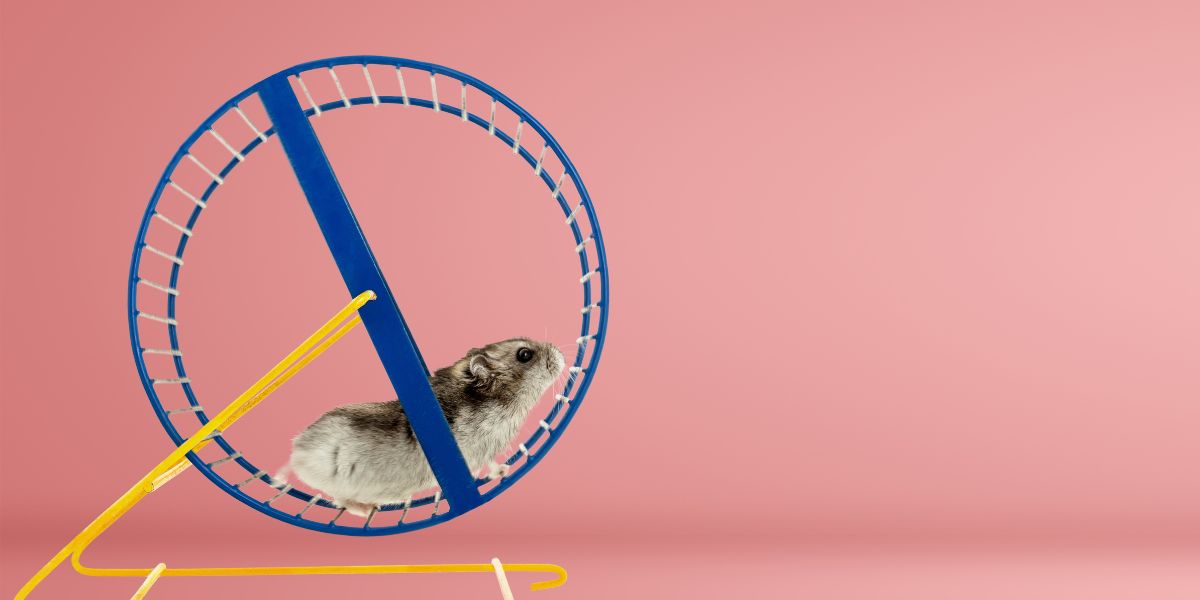
Anyone who has ever owned a hamster knows the sound, the steady squeak of a wheel spinning well past midnight. For years, the assumption was simple, hamsters ran because they were bored, stressed, or trapped in cages with nothing better to do. Scientists once even described it as a kind of compulsive behaviour caused by captivity.
That idea has been steadily unravelled. A major shift came from a long‑running experiment led by Dutch researcher Johanna Meijer, who placed running wheels outdoors in natural environments. The expectation was that wild animals would ignore them. Instead, wild mice jumped on and ran voluntarily, sometimes for extended stretches that closely matched the patterns seen in laboratory animals.
Crucially, the behaviour did not depend on food rewards. Although food was initially used to attract animals, wheel running continued long after it was removed. Young mice with no previous exposure still chose to run, suggesting the activity itself was the reward. Over several years, the wheels attracted a range of animals, including shrews, frogs, and even slugs, though mice accounted for the vast majority of runners.
So why do they do it? According to evolutionary biologists, running taps into a deep‑rooted drive to move. In the wild, rodents travel long distances each night while foraging and avoiding predators. The wheel provides a safe outlet for that instinct, triggering brain pathways linked to pleasure and motivation, similar to the feel‑good response humans get after exercise.
Researchers also point out that wheel running fails the definition of a stress‑induced habit. It happens in both captive and wild settings, and it does not escalate endlessly as harmful repetitive behaviours tend to do. Instead, animals appear to engage with the wheel because they enjoy it, not because they are trying to cope with poor conditions.
For pet owners, the findings come with a reassuring takeaway. That late‑night workout is not a sign something is wrong. Providing a well‑designed wheel is considered essential enrichment, allowing hamsters to express a natural behaviour that keeps them physically active and mentally engaged.